Scaling Customer Acquisition Across Regions Without Losing Momentum
Expanding a business into new regions usually brings a mix of excitement and anxiety. The excitement comes from reaching more potential customers; the anxiety comes from the fear that what worked in one market may not work in another. When you are trying to grow nationally, the biggest challenge is not finding new leads but keeping the lead generation machine running smoothly across every location. Many companies find that their local success does not automatically translate to other areas, and the systems that served one office start to crack under the weight of multiple regions.
National customer acquisition requires a different mindset from local growth. You cannot simply copy a single playbook and expect it to work everywhere. Regional demand varies, local competitors behave differently, and the language people use to search for services shifts from city to city. The key is to build processes that are consistent enough to be repeatable but flexible enough to adapt to local conditions. Below are the steps to maintain a steady flow of leads as you expand, along with the common pitfalls to watch at each stage.
Understand the Demand Patterns in Each New Market
Before you spend any money on ads or outreach, you need to know whether the demand that exists in your current market also exists in the new one. A product or service that is popular in one region may be unknown or unwanted elsewhere. This is where market intelligence becomes essential. Look at search volume data, social media conversations, and local business listings to gauge interest. If you see that people in a new city are searching for terms related to your offering, that is a good sign. If not, you may need to adjust your messaging or even reconsider the location.
What to watch: Do not assume that high search volume means high conversion. Sometimes a term is popular because people are researching but not buying. Pair search data with competitive analysis to see how many other businesses are already targeting those terms. If the competition is intense, you may need a different angle or a longer ramp-up period.
Build a Scalable Lead Generation Workflow
Once you understand the demand, you need a system that can handle multiple locations without manual intervention for every step. A scalable workflow means that when you add a new region, you do not have to reinvent the process. Instead, you plug that region into an existing framework. This usually involves automated funnels that capture leads, nurture them, and route them to the right sales team or partner. For example, a central lead intake form can feed into a CRM that assigns leads based on zip code or area code, so no lead falls through the cracks.

What to watch: Automation can feel impersonal if it is not tuned to local preferences. A lead in one city may expect a phone call within minutes, while another may prefer a text message or an email. Build in rules that respect regional norms. Also, avoid over-automation in the early stages. If you automate every touchpoint before you have tested them locally, you may waste money on sequences that do not resonate.
Use Centralized Reporting to Spot Trends Early
As you operate in more locations, you need a single view of performance across all of them. Centralized reporting allows you to compare how each region is doing on the same metrics: cost per lead, conversion rate, lead volume, and time to close. Without this, you might miss a decline in one market until it becomes a serious problem. A good reporting system aggregates data from all your customer acquisition channels and presents it in a way that highlights both the big picture and the local details.
What to watch: Centralized reporting only works if the data is clean and consistent. If one office uses a different CRM field for "lead source" than another, the reports will be misleading. Set standards for data entry early and enforce them across all locations. Also, do not rely solely on dashboards. Schedule regular reviews with local teams to discuss the numbers and hear the context behind them.
Maintain Campaign Consistency While Allowing Local Customization
One of the hardest parts of national expansion is finding the right balance between a unified brand message and local relevance. If every region runs its own ads with its own creative, you lose the cumulative effect of a consistent brand. But if you force the same ad copy on every city, you risk sounding irrelevant. The solution is to create a core campaign framework that includes the brand voice, key selling points, and visual guidelines, and then let local teams customize the specific offers, imagery, and calls to action. For example, a national home services company might run a winter preparedness campaign everywhere but use photos of snow-covered houses in northern markets and images of rain gutters in warmer climates.
What to watch: Local customization can drift into inconsistency if there is no oversight. Set up a review process where local ads are approved against the core framework before they go live. Also, watch for "localitis", when a regional manager changes so much of the campaign that it no longer resembles the national brand. The goal is to adapt, not to rewrite.
Invest in Location Targeting and Local SEO
Paid advertising can get you leads quickly, but sustainable national customer acquisition often relies on organic visibility in each region. Local SEO helps your business show up when someone searches for your service plus a city name. This means creating or claiming local listings, getting reviews from customers in each area, and building location-specific pages on your website. The same principles apply across regions, but the execution must be local. A page about "plumbing services in Austin" should mention Austin landmarks, neighborhoods, and common plumbing issues in that area.
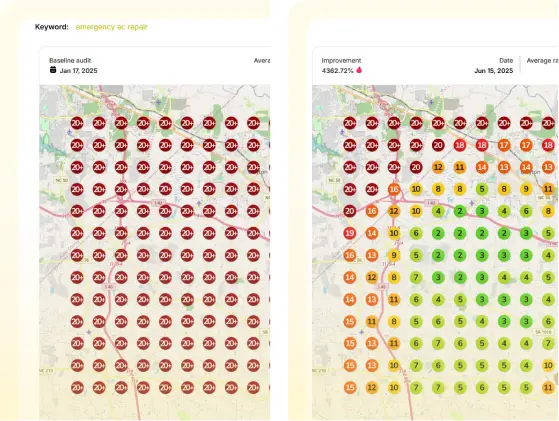
What to watch: Do not try to rank for hundreds of cities at once. Start with a handful of high-potential locations and build authority there before expanding. Also, avoid duplicate content. If every city page uses the same paragraph with only the city name changed, search engines may penalize you. Write unique content for each location, even if it takes more time.
One platform that helps businesses manage these complexities is webrankdigital.com. It provides tools for market intelligence, competitor analysis, automated funnels, and lead tracking, all designed to support growth across multiple locations. The idea is to centralize the data you need while still allowing local teams to act on it.
Track Lead Quality, Not Just Volume
When you expand, the temptation is to focus on the number of leads coming in. A new region may generate hundreds of leads quickly, but if those leads are low intent or unqualified, they waste your sales team's time. Define what a qualified lead looks like for your business and track how many leads in each region meet that criteria. Use lead tracking to see which channels and campaigns produce the highest quality leads, not just the most.
What to watch: Quality definitions can change as you learn more about a market. In a new region, you may initially accept a broader range of leads to build volume, then tighten the criteria as you understand who converts. Communicate these shifts to your sales team so they know what to expect. Also, beware of vanity metrics. A high open rate on an email campaign may look good, but if it does not lead to conversations, it is not helping your acquisition goals.
Iterate Based on Regional Data
No expansion plan survives first contact with the market. You will learn things from each region that you could not have predicted. The companies that succeed are the ones that treat each location as a learning lab. If a campaign works well in Dallas but flops in Seattle, ask why. Was it the offer, the timing, the imagery, or the competitive landscape? Collect that knowledge and feed it back into your central system so that future campaigns in similar markets benefit from it.
What to watch: Do not overcorrect based on one data point. A single bad week does not mean a strategy is broken. Look for patterns over several weeks or months before making big changes. Also, avoid the temptation to declare a region a failure too early. Some markets take a long time to build trust and recognition.
Keep the Human Element in the Process
Even the best software and processes cannot replace the judgment of people who know the local market. As you scale, make sure you have team members or partners in each region who understand the culture, the competitors, and the customer expectations. They can spot opportunities and risks that a centralized team might miss. Give them the tools and data they need, but trust their instincts on local execution.
What to watch: As you add more regions, communication can become a bottleneck. Set up regular check-ins between the central team and local leads. Use a tool like webrankdigital.com to keep everyone aligned on the same metrics and priorities, but let the local team decide how to hit their targets. Micromanaging from a distance usually backfires.
Expanding nationally does not mean you have to start from scratch every time you enter a new market. By building a repeatable yet adaptable system for national customer acquisition, you can maintain consistent lead generation across all your locations. The key is to invest in the right data, automate where it makes sense, stay flexible, and never stop learning from the market itself.